



Delta, Tadpole, Recumbent, Articulating... Whats going on?
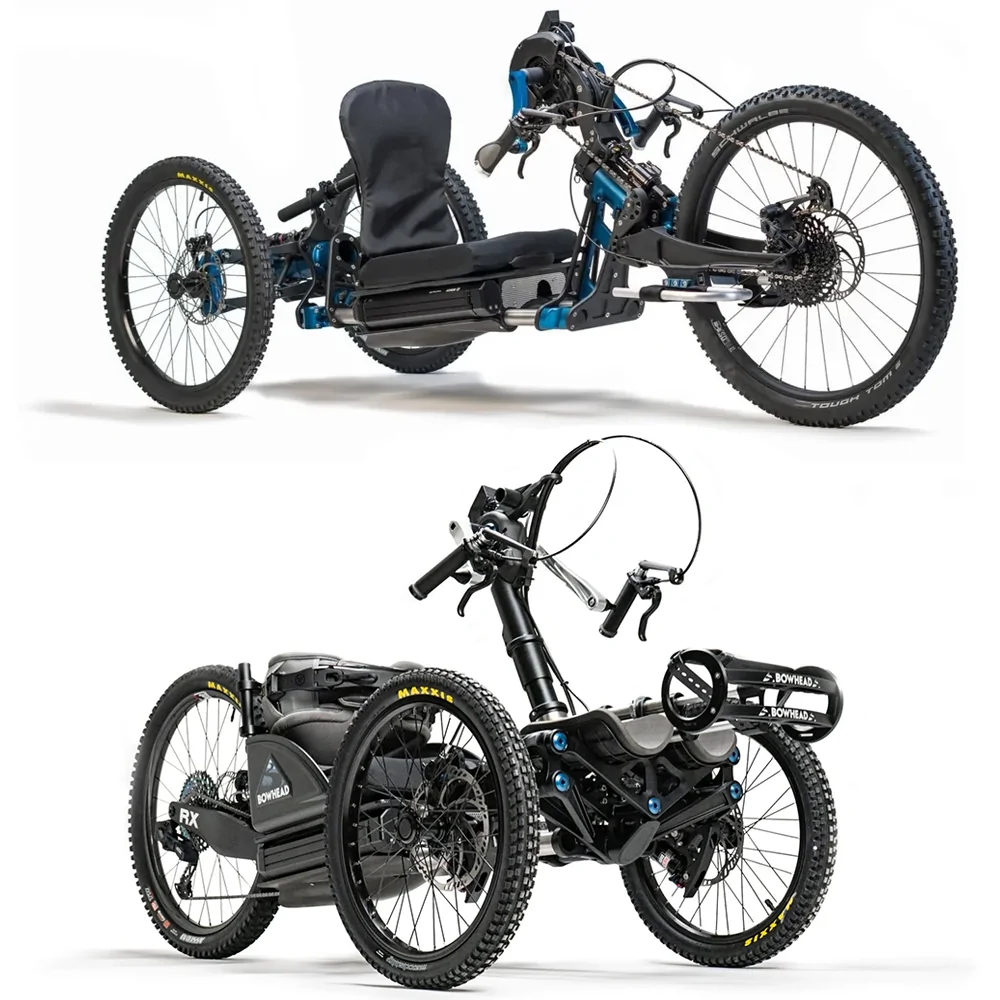
When looking at 3 wheel adaptive cycles, the first, and most visual difference is the wheel layout.
Tadpole Vs. Delta
Delta: The most common platform within handcycles – a single wheel at the front, with two rear wheels makes for a nice stable platform.
The single front wheel is driven, minimising drivetrain losses found in rear drive variants. However the downside to this configuration is when riding off-road, front wheel drive can lead to wheel spin and loss of traction.
Exceptionally comfy and typically easier to transfer in and out of.
Tadpole: Two front wheels with a single rear – arguably a quicker handling machine.
The tadpole layout lends itself well to leg powered recumbents due to positioning and biomechanics. Although they generally have the ability to perform tighter turns, they tend to be less stable than a delta design.
The Tadpole layout is used on the Bowhead Reach and RX for its favourable rear wheel traction.
The engineering within Bowhead’s unique Flow articulating front end allows the bike to lean into turns and ride across cambers, whilst also allowing it to benefit from a much narrower track width.
Get in touch today, and we will work with you to properly identify your perfect match.
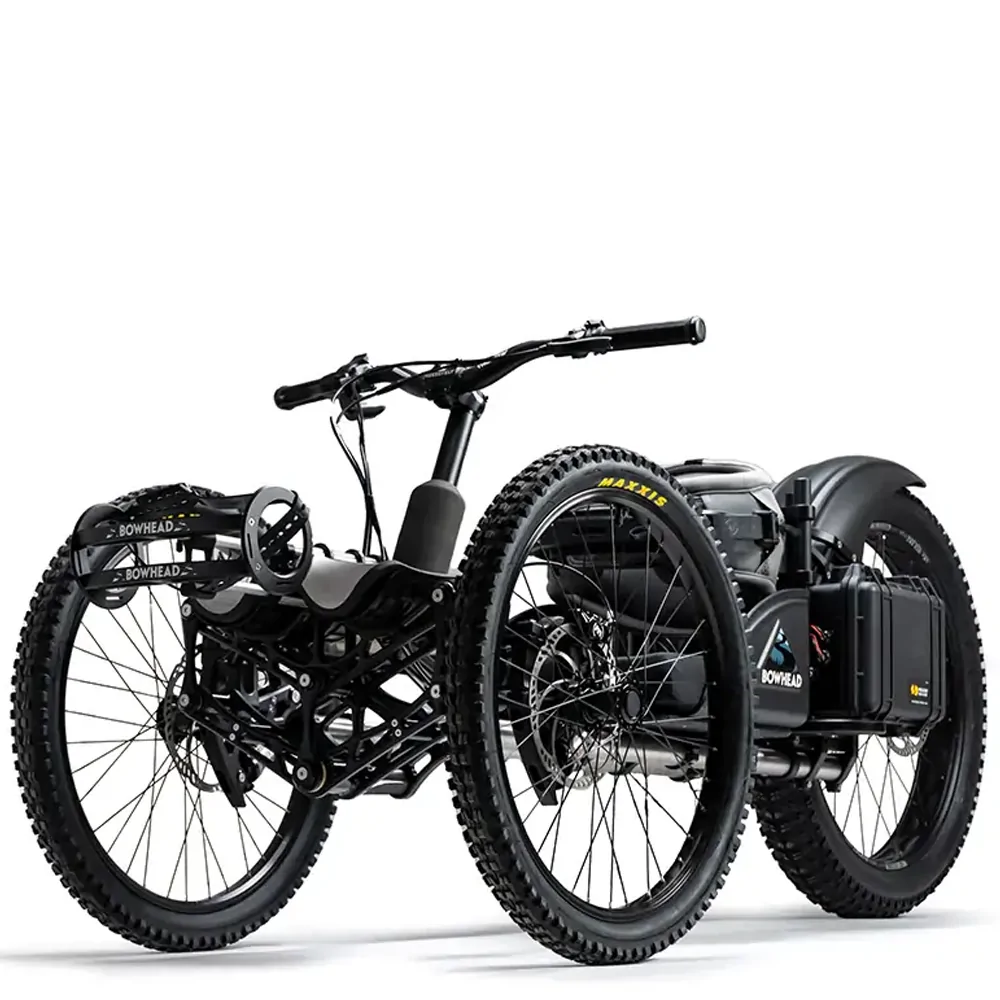
Articulating adaptive bikes are highly unique in that they allow the user to lean the bike over, just like a conventional bicycle.
Articulating Bikes
Designed to give individuals with disabilities access to any off-road trail no matter the terrain, they feature a unique articulating front frame to allow the rider to bank into turns and handle rough terrain and adverse camber.
The fully electric Reach is ideal for bike parks without uplifts, the motor can carry riders to the top and provide an experience like no other on the descents, whilst the pedal assist RX handcycle models excel as all-mountain, endur0 bike, opening access to terrain and destinations many riders would never expect to reach.
Each bike can be tailored to the specific needs of the rider, allowing them to explore new trails and enjoy the challenge and exhilaration of mountain biking.
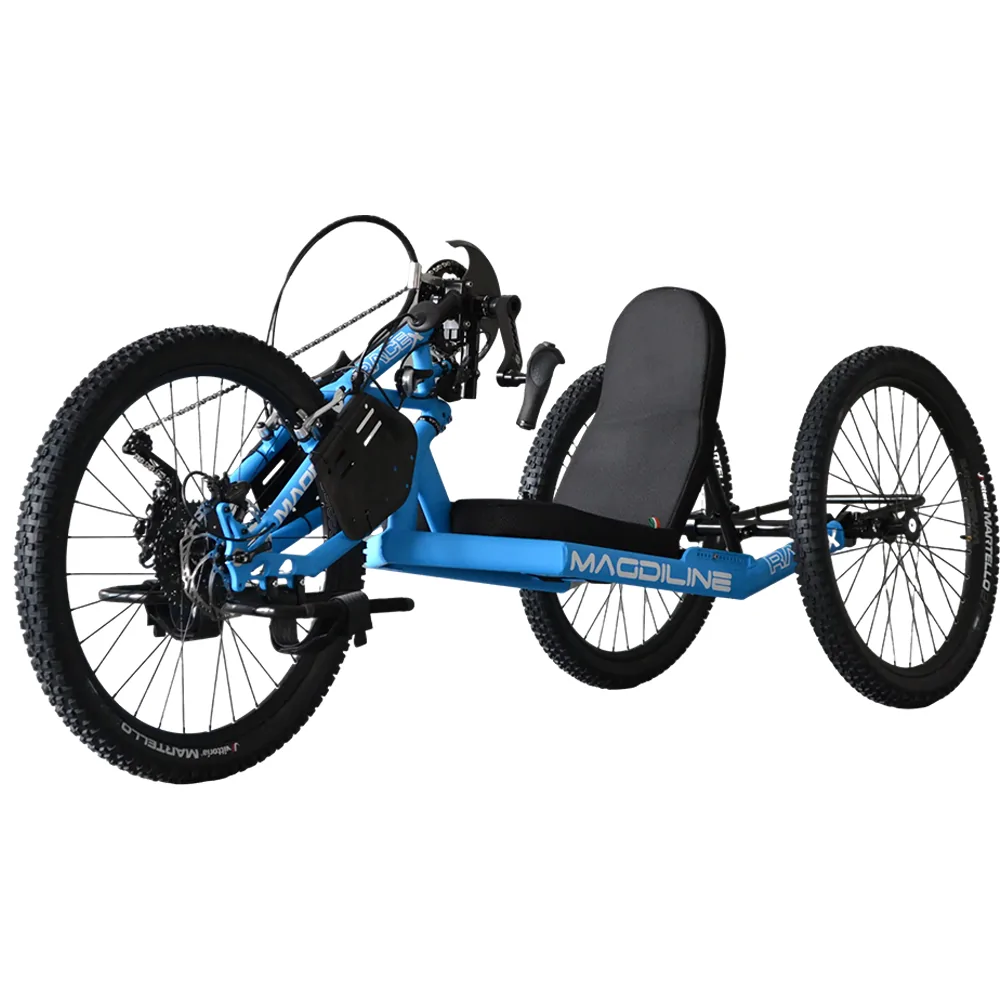
Handcycles are adaptive bikes designed to be propelled by the rider’s arms rather than their legs
Handcycles
An excellent choice for individuals with lower body disabilities or limited leg strength who want to get involved in adaptive cycling.
They are available with or without pedal-assist motors, though off road riders prefer motor assistance on off-trails whilst road handcycles tend to be lighter so not needing the assistance.
Handcycles are typically a delta design, however there are a number of Tadpole’s on the market.
Handcycles are broad and encompass everything from fully rigid, reclined road racers, to up-right MTBs with all wheel suspension and large motors. Meaning there is a handcycle to suit all occasions!

Recumbent leg powered bikes offer a reclined riding position
Recumbents
These bikes are operated by pedalling with the legs in a seated position with steering controlled through side-mounted handlebars on either side of the rider.
They are typically more supportive for riders with neurological pain, amputations, and general core/balance impairments.
Recumbents are available as fully manual, or with a pedal-assist motor and are ideal for road, touring and light mountain biking.

Clip-on handcycles are innovative attachments that transform a standard manual wheelchair into a crank-driven tricycle.
Clip On Handcycles
They raise the front castors off of the floor allowing a smoother ride and better stability, offer increased range, speed, and exercise, while quick-release docking allows for easy transitions on and off the wheelchair.
Available in both manual and electric-assist options, clip-on handcycles are suitable for a wide range of terrains, from city commutes to park paths.
Adaptive cycling refers to the practice of using specialised adaptive bikes or modifications to traditional bikes to meet the unique needs of individuals with disabilities. This can involve various adjustments, such as changes to the frame, seating, pedals, or handlebars, to ensure a comfortable and accessible cycling experience.
Each type serves a specific purpose and addresses different mobility requirements. Handcycles, for instance, are manually operated by hand pedals, while recumbent leg-cycles provide a reclined seating position. Delta style bikes are typically more stable whereas articulating frames offer better leaning when riding off camber trails.