



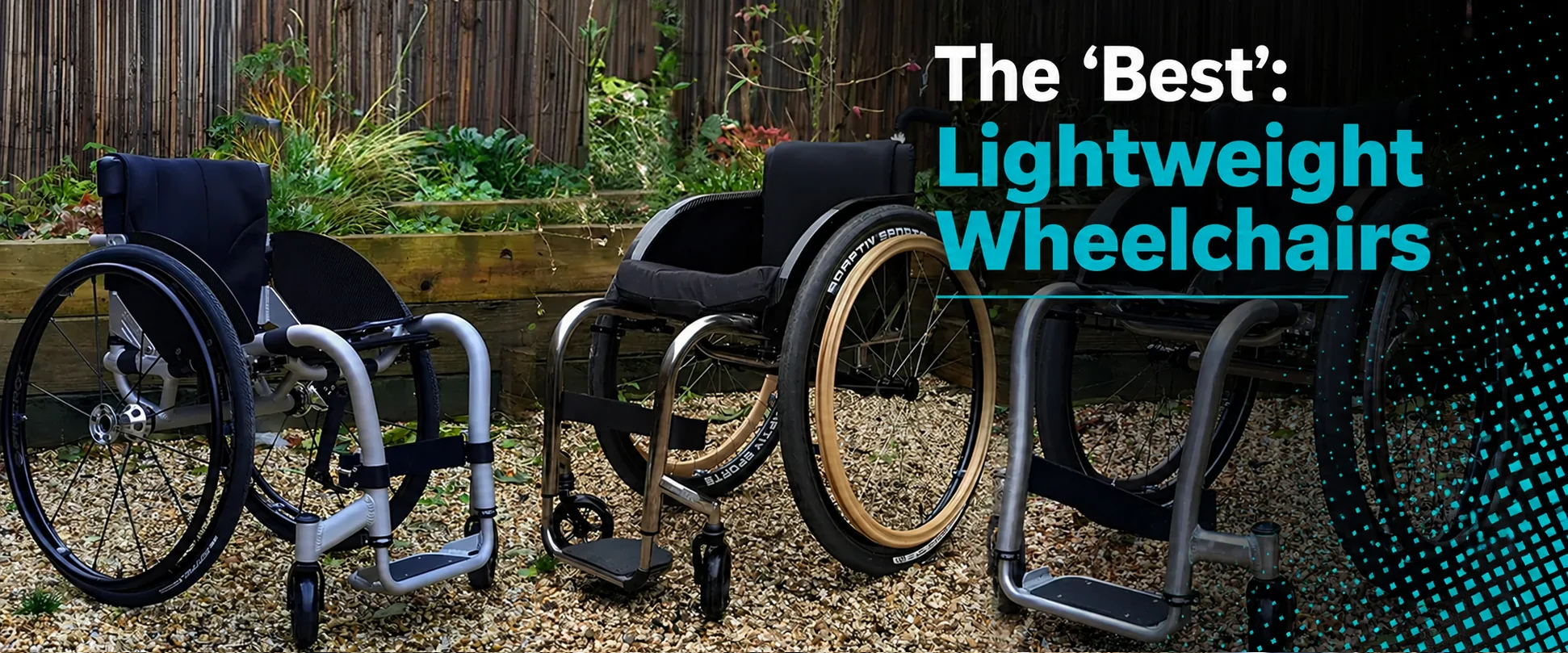
The best chair is the one that fits your lifestyle, not just your needs.
A guide to Finding the Best Lightweight Wheelchair for Your Lifestyle
Forget searching for the single “best” model. In the world of mobility aids, the quest for the absolute best lightweight wheelchair can be a frustrating exercise. Why? Because “the best” chair is as unique as the person using it! What works for someone else, may not work for you.
Whether you are looking for portability, custom geometry, or long-term durability, the “right” choice depends entirely on your experience level and physical requirements.
Adjustable Vs. Fixed
If you are just starting out with a wheelchair, your needs and ability are likely still evolving. You shouldn’t be locked into a rigid setup immediately as you need to find out what suits you and your lifestyle. An adjustable chair is ideal as you can make changes as you progress on your wheelchair journey – make the chair more active by moving the centre of gravity, raise seat height to make transfers easier – its all about finding what suits you.
For seasoned wheelchair users, you already know what works for your body, your experience levels, needs and requirements. A fixed frame offers more rigidity and is typically lighter, ideal for those who break down their wheelchair when getting into the car for example. You know where your balance point is, have a good understanding of lifestyle needs and want a chair that works the way you need it too.

Adjustable geometry to change as you do
New Users
Adjustable lightweight wheelchairs allow you to fine-tune essential elements as you become more accustomed to daily use:
Centre of Gravity: Adjusting your COG can make the chair more stable or more active as you progress.
Backrest Angle: Vital for core stability and comfort whilst your needs change
This flexibility helps you discover the perfect setup for your body and activity level as you adjust to your new normal.

You know the score
Seasoned Wheelchair Users
Fixed or rigid wheelchairs are designed to offer a lighter, more responsive chair for someone who knows exactly what they want:
Fixed Frames: A non adjustable frame offers a familiar level of stability and a ride that feels customised to your preferences. Many experienced users prefer the “energy efficiency” of a rigid frame.
Weight: If you independently travel by car or lead an active lifestyle, the weight saved by having a fixed frame benefits your shoulders when moving the wheelchair and feels more stable when your in it.
Key Factors to Consider When Buying a Lightweight Wheelchair
After the Adjustable Vs. Fixed frame type choice, several technical factors influence how a chair performs in the real world. Although highly dependent on your ability level, lifestyle requirements and budget, some key points to consider are:
Aluminium: The most popular choice due to its excellent balance of strength and durability.
Titanium: An option for those seeking increased rigidity with superior vibration dampening.
Carbon Fibre: Known for exceptional stiffness, energy efficiency, and shock absorption.
– CHECK OUT OUR POST ON FRAME MATERIALS HERE –
Easy lifting into vehicles: A lighter chair is easier to lift solo making car transfers much easier.
Folding frames: A folding chair can collapse down into a smaller spaces making it easier to travel with.
Castor size and camber: Larger castors “skip” over rough surfaces easier and more rear wheel camber offers stablity and quick turning, however they do create a wider wheelchair.
Rigid frames: A non-folding frame is typically lighter, boasts better responsiveness, performance and efficiency.
Folding frames: Although slightly heavier than a rigid frame, folding wheelchairs are ideal for users who need flexibility over performance. They are more convenient to store, making them ideal for transport and travel purposes.
Conclusion
There is no one-size-fits-all solution. To ensure you find the right chair, we recommend a professional evaluation.
Whether you need an adjustable or fixed frame, a folding model or a custom rigid frame, our Occupational Therapist can assess your specific requirements and provide: expert recommendations based on your daily environment, proper adjustments for optimal comfort and safety, and guidance on maximizing your independence.